
This Month’s Topic:
LOUNGE CHAIRS
Lounge chairs reign supreme in the domain of guestroom tower and public area hospitality design. They wield the ability to infuse vitality into your design vision, serving as both functional art installations and havens of comfort.
Whether for dining, working, or unwinding, these chairs fulfill multifaceted roles. However, neglecting industry standard specifications would not only lead to subpar performance but also miss the opportunity to truly captivate, inspire, and above all, elevate guest experiences.
So, what do you need to know?
Let’s Dive in!
#1. Seat Height
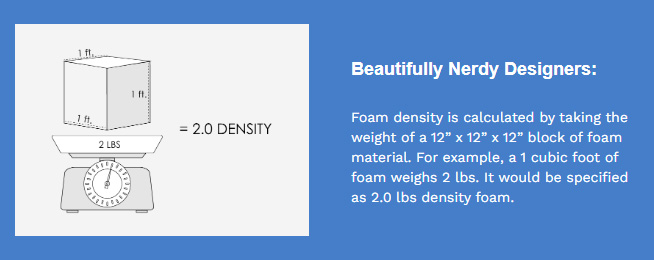
What does 1.8 lbs foam even measure?
Delving into the world of lounge chairs, one of the most delightfully perplexing and important specification call outs is related to foam. Confession time: I’ve often found myself aligning with the guestroom standard 1.8 lbs/28 ILD…not really understanding what this technically means… Let’s take a beat and unravel the mystery behind these two different measurements, shall we?
The density value of foam provides us with a measurement of foam quality.
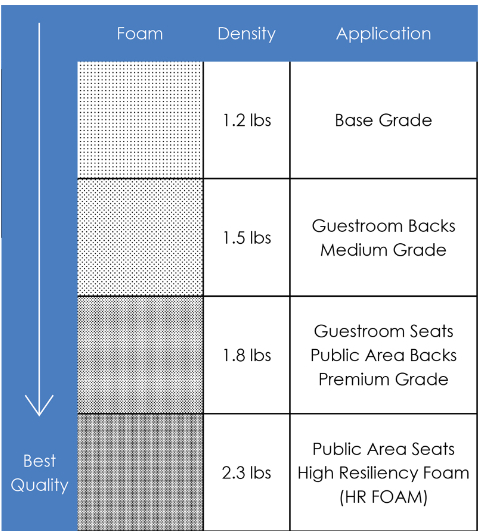
In the world of hospitality design, foam density typically ranges from 1.2 to 2.5 lbs. The higher the foam density the better the durability and longer the lifespan, meaning the foam will spring back and recover its shape after use. Now why is there a difference in foam density between public area hospitality projects vs guestrooms? It suggests that a hotel’s guestroom is home to frequency of “rest” playing a bigger role in hospitality design, but hospitality seats in a public area of a hotel with more traffic, use, and wear may require a higher grade foam.
***Foam density doesn’t relate to firmness or softness of sit.***
#2. Indentation Load Deflection
(ILD)

Think of ILD as the foam’s comfort gauge — it tells you just how soft or firm your seat is going to be. In the technical ILD spectrum of hospitality design, seat cushions can range from a squishy 24 ILD (soft as a cloud) to a sturdy 45 ILD (firm as a board). Keep in mind how much guests will sink into the seat cushions when coordinating seating and table tops.
Depending on the vibe of your lounge chair design, factors like cushion thickness, the quality of the fabric (be thicker firmer sit), and the seat construction (whether it’s all about strappy webbing, bouncy springs, or sturdy plywood) all come together to create different guest “sit experiences.”
As you can tell, lots of factors come into play when curating a guest “sit experience.” We are happy to help you figure it out – just ask!
#3. Ergonomics
Now, let’s ponder lounge chair seating ergonomics in threes… We have seat height, seat depth, and back pitch.
Height + Depth
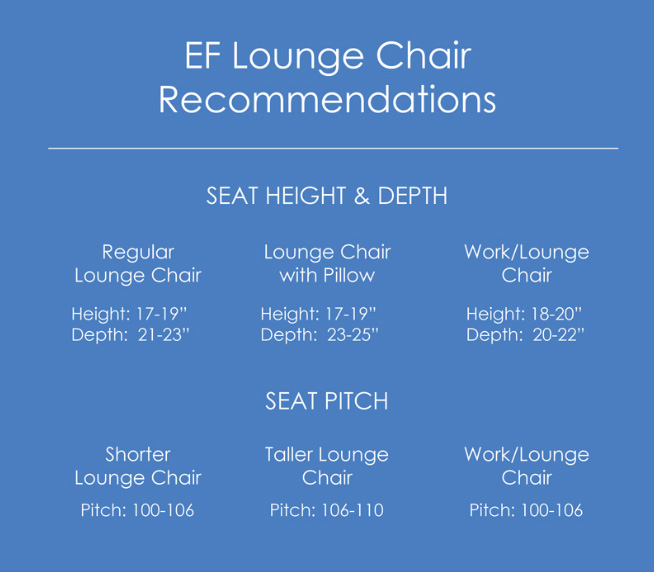
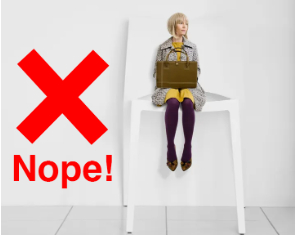
Let’s tackle seat height and seat depth, which share a relationship close as siblings. The combined measurement of seat height and seat depth should equal roughly 40 inches. Consistency, a higher seat height should be accompanied by a shallower seat depth, and vice versa. This approach should be accomplished ensuring your experience is not so alarming, such as dangling feet or struggling to get out of the chair.

Pitch
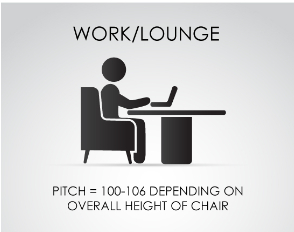
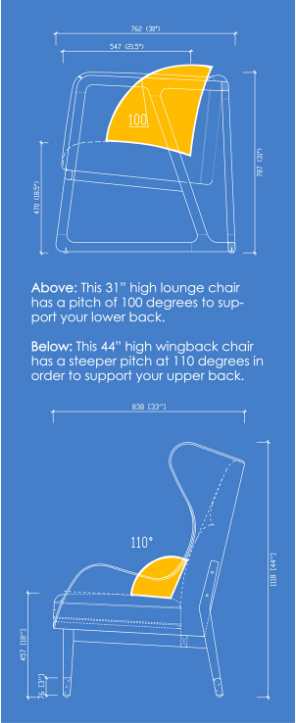
Lounge chair back pitch can be anywhere from 100-110. Now this is a pretty big swing. In order to support you, a shorter chair needs to catch your lower back so the pitch is steeper. Inversely, a taller lounge chair can have more layback because the chair is catching your upper back. For work/lounge chairs- we recommend a pitch of 100-106- a bit more upright so you can sit at a table, write or type on your laptop.